 English
  Português
CPVC
The Commission for the Protection of Victims of Crime (CPVC) is an independent administrative body responsible, by itself or through its members, for granting advances of compensation by the State to victims of violent crime and domestic violence, which operates under the Ministry of Justice.
Updated on
Mission
The Commission for the Protection of Victims of Crime is the body within the Ministry of Justice responsible for receiving, analysing and deciding on claiming compensation to be granted by the state, which are submitted by both victims of violent crime and victims of domestic violence.
According to the current legal framework, Law 104/09, of 14 September, protection for victims of violent crime consists of the state awarding compensation to direct victims or, in the event of their death, those who were economically dependent on them, when the civil compensation set by the courts cannot be borne by the individual(s) who committed the crime and provided that the damage caused by the crime has caused considerable disruption to the victim's standard of living or quality of life.
For victims of the crime of domestic violence, it consists of compensation from the state, in the form of a monthly income, to be paid at the time of the family breakdown, provided that the victim has been left in a situation of serious economic need as a result of the crime.
Updated on
Organisational chart
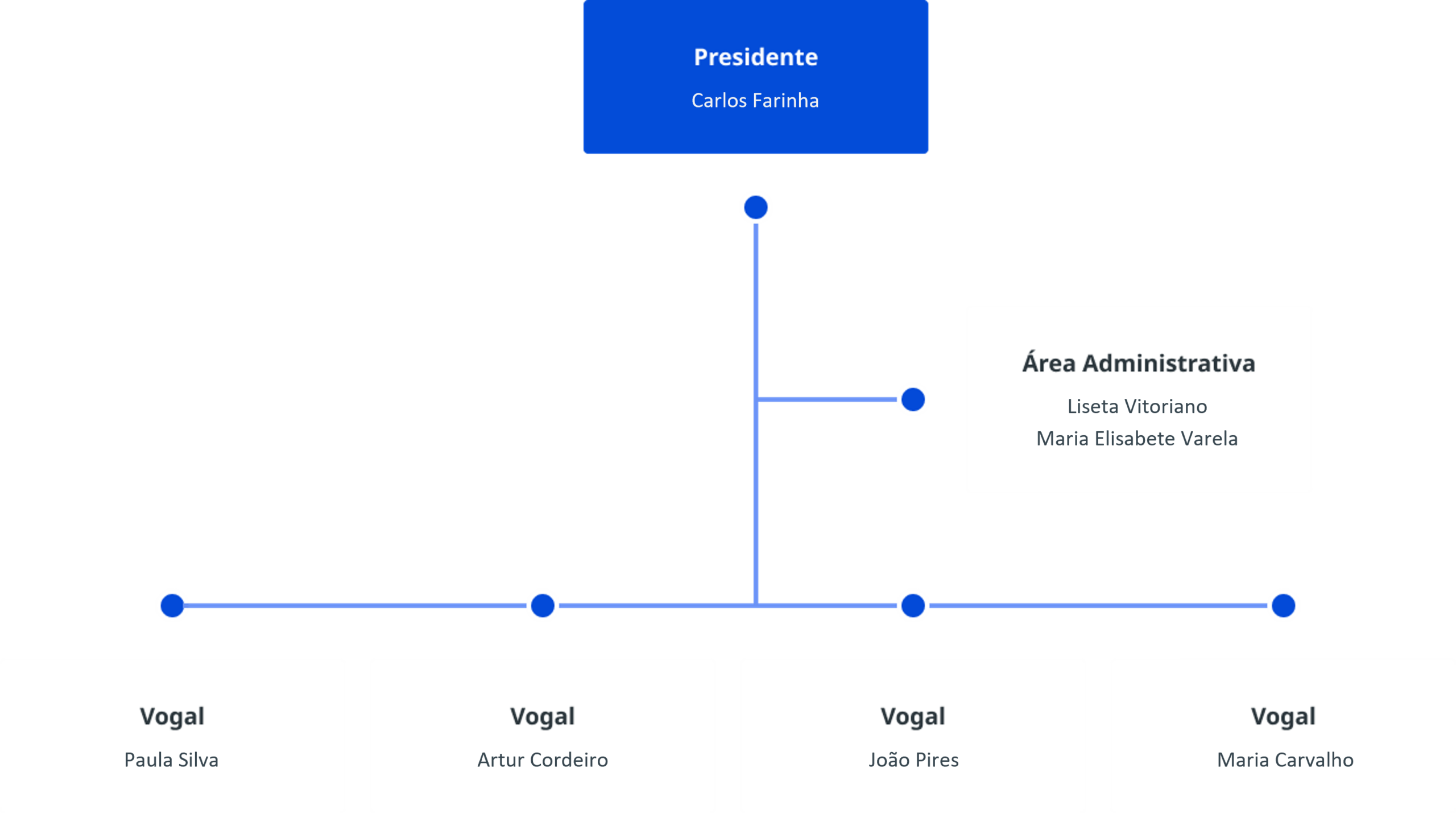
The CPVC is made up of a chairman and four members.
Its composition is set out in article 3 of Decree-Law 120/2010 of 27 October, which regulates the constitution, functioning and exercise of powers and duties of the CPVC.
Members appointed by the member of the Government responsible for the area of justice [no. 1, point a)]:
Chairman
Dr. Carlos Farinha, Coordenador Superior de Investigação Criminal da Polícia Judiciária
Member appointed by the Superior Council of the Judiciary [no. 1, point b)]:
Member appointed by the Superior Council of the Public Prosecution Service [no. 1, point c)]:
Member appointed by the General Council of the Portuguese Bar Association [no. 1, point d)]:
Updated on
Ethics and Conduct
The Code of Ethics and Conduct of the Commission for the Protection of Crime Victims (CPVC) is a document that establishes a set of principles, rules, and values to be observed in the performance of activities carried out by the leaders and other employees of this Commission, in their professional relationships with one another and with third parties, reflecting the will and culture of the organization itself.
The Code of Ethics and Conduct aims to:
- To set forth the ethical principles that govern CPVC;
- To specify the standards of conduct expected of CPVC’s management and employees;
- To inform the public of the conduct and attitude they can expect from CPVC’s management and employees in their dealings with them.
The image of any organization increasingly depends on the ethical conduct of its leaders, employees, and other staff members, who must base all their actions on shared values—principles of conduct that embody a clear standard of professional behavior. These principles guide them not in terms of what they could do, but rather in doing exactly the right thing, always to the satisfaction of both the organization and the people who seek its services.
The primary purpose of this Code is to improve individual attitudes and collective professional conduct in both internal and external relationships, in order to prevent practices that violate both ethical standards and the standards of public service conduct that should guide the Public Administration.
Ethics is much more than just a word. It must be a practice, one that is demonstrated through the example set by both leaders and employees in their daily work, always with respect for the values of the public organization they serve, for citizens, and for the State. That is why the adoption of the principles, values, and standards of conduct established in this Code must be a commitment undertaken by everyone who performs duties at CPVC.
Therefore, everyone who works at CPVC must conduct themselves in an ethically sound manner and must never overlook the impact that their decisions, actions, and behavior—whether by act or omission—may have on everyone they interact with, whether they are CPVC members or other users.
In the context of corruption prevention, there has always been a recommendation to implement codes of conduct that clarify the expected behavior of managers and other employees, as it is widely recognized that adherence to these ethical guidelines can reduce the likelihood of incidents involving potential fraud and corruption.
As a public service-oriented institution, the Public Administration must be guided by conduct that respects the general interest; therefore, the primacy of the public interest imposes a set of principles and duties on its leaders and employees, such as:
- The principle of neutrality;
- The principle of legality;
- The principle of justice and impartiality;
- The principle of equality;
- The principle of proportionality;
- The principle of collaboration and good faith;
- The principle of information and quality;
- The principle of loyalty;
- The principle of integrity;
- The principle of competence and responsibility.
These principles and duties are set forth both in the “Ethical Charter—Ten Ethical Principles of Public Administration” and in other legal and administrative instruments, notably the Code of Administrative Procedure (CPA).
Accordingly, the provisions of this Code must be interpreted in accordance with the applicable legal provisions governing the rights, duties, and responsibilities of all managers and employees of the Public Administration.
This Code was drafted in accordance with Article 7 of the General Anti-Corruption Framework (RGPC), approved by Decree-Law No. 109-E/2021 of December 9, and its adoption reflects CPVC’s commitment to integrity, transparency, and the public interest, guiding individual conduct by the precise meaning of “doing the right thing.” Accordingly, the following Code of Ethics and Conduct is hereby approved:
Chapter I
GENERAL PROVISIONS
Article 1
Purpose
This Code of Ethics and Conduct establishes a set of principles and rules regarding ethics and professional conduct to be observed by CPVC’s management and employees, both in the performance of their duties and in their interactions with one another and with third parties.
Chapter II
PRINCIPLES
Article 2
General Principles
Managers and employees must carry out their activities at CPVC in accordance with the following principles:
a) Legality – They must perform their duties in accordance with constitutional principles and in strict compliance with the law, as well as comply with all legal and regulatory provisions applicable to their activities.
b) Impartiality and Objectivity – They must treat all those associated with CPVC in a neutral, objective, and fair manner.
c) Equality – They may not favor or disadvantage any person or entity on the basis of race, sex, age, ancestry, language, political, ideological, or religious beliefs, sexual orientation, social status, or economic situation.
d) Loyalty – They must act loyally, in solidarity, and cooperatively, both among themselves and with the public and private individuals and entities with whom they interact in the context of the duties entrusted to them.
e) Pursuit of the public interest - they must always act in accordance with the principle of good faith, always with a view to realising the public interest in order to provide an excellent public service, without neglecting the legitimate interests, claims and rights of those who have dealings with CPVC.
f) Information – They must provide all information and clarifications that are required or requested in the most complete, prompt, clear, accurate, and courteous manner possible, always in compliance with applicable laws and regulations.
g) Integrity – They must act, in all circumstances, with integrity, personal and professional honesty, and respect for others, and must not engage in any conduct that could in any way harm their fellow employees or the individuals or entities with whom they interact.
h) Competence and Responsibility – They must perform the duties or tasks assigned to them competently and with dedication, rigor, diligence, and a constructive critical spirit.
i) Courtesy – They must treat everyone with whom they interact in a cordial, respectful, and considerate manner, fostering a healthy work environment and a conciliatory and cooperative relationship with other individuals and entities.
j) Collaboration and Good Faith – They must collaborate with any individuals or entities with whom they interact in order to achieve the most appropriate outcome possible for the fulfillment of their mission and act in a manner that does not create unjustifiable obstacles or difficulties for those individuals or entities.
Article 3
Professional Diligence
1 – The conduct of CPVC’s officers and employees must be guided by loyalty to the organization and must be honest, independent, impartial, and free from personal interests.
2 – CPVC’s officers and employees must adhere to high standards of professional ethics.
3 – CPVC officers and employees must cooperate with one another, providing all information that may be relevant to the proper performance of their respective duties in a timely, complete, and accurate manner.
4 – CPVC employees must perform their duties with diligence, efficiency, and responsibility, ensuring compliance with instructions, respect for the appropriate chain of command, and transparency in dealing with all stakeholders, and must conduct themselves in a manner that maintains and strengthens public confidence in CPVC, contributing to the organization’s effective operation, good reputation, and positive image.
5 – CPVC managers and employees must ensure that all of the organization’s assets and equipment are used responsibly and efficiently, avoiding the waste of public resources.
Chapter III
INFORMATION MANAGEMENT
Article 4
Professional Confidentiality
CPVC’s officers and employees are bound by professional confidentiality and must keep strictly confidential, and may not disclose or use, for any purpose, for their own benefit or that of others, either directly or through an intermediary, any information obtained in the performance of their duties or by virtue of such performance.
Article 5
Data Protection and Cybersecurity
1 – CPVC executives and employees who, in the course of their duties, have access to any personal data of third parties are required to comply with the legal provisions regarding data protection (GDPR) and may not use such data except for the purposes provided for by law.
2 – CPVC’s information management system must be used exclusively for professional purposes.
3 – Access credentials are personal and non-transferable, and it is everyone’s duty to ensure the cybersecurity of the network.
Article 6
Information Sharing
Without prejudice to the provisions of the preceding articles, employees must ensure the communication, recording, and sharing of information among themselves and within CPVC, thereby facilitating the preservation of knowledge acquired or created in the course of their work.
Chapter IV
PREVENTION OF CRIMINAL OFFENCES
Article 7
Prevention of Corruption and Related Offenses
1 – CPVC’s officers and employees must actively combat all forms of corruption, whether active or passive, and related offenses, paying special attention to any form of payments, favors, or collusion that may lead to the creation of illicit advantages.
2 – Managers and employees must not accept any form of payment or other benefit that could create the expectation of favoritism or an illicit advantage, such as offers from applicants or suppliers.
Chapter V
COMPLIANCE AND MONITORING
Article 8
Non-compliance
1 – Any violation of the principles and duties set forth in this Code, provided that the legally established conditions for such action are met, may give rise to disciplinary liability, without prejudice to any civil, administrative, or criminal liability.
2 – The Chair of the Commission is responsible for investigating and ruling on situations involving violations of the Code of Ethics and Conduct by CPVC employees when disciplinary liability is at issue.
3 – In the event that conduct is found to constitute a criminal offense, it must be immediately reported to the Public Prosecutor’s Office, providing all evidence and disclosing all known facts that indicate suspicion of fraud, corruption, or any other criminal activity.
Chapter VI
FINAL PROVISIONS
Article 9
Publicity
This Code must be disseminated by all CPVC managers and employees through internal communication channels (intranet and institutional email) and published on the CPVC website.
Article 10
Entry into Force
This Code shall enter into force on the day following its publication on the CPVC website.
Updated on
Activity reports
| Name | |
|---|---|
| Relatório Anual de Atividade 2024 | Consult here |
| Relatório Anual de Atividade 2023 | Consult here |
| Relatório Anual de Atividade 2022 | Consult here |
| Relatório Anual de Atividade 2021 | Consult here |
| Relatório Anual de Atividade 2020 | Consult here |
| Relatório Anual de Atividade 2019 | Consult here |
| Relatório Anual de Atividade 2018 | Consult here |
| Relatório Anual de Atividade 2017 | Consult here |
| Relatório Anual de Atividade 2016 | Consult here |
| Relatório Anual de Atividade 2015 | Consult here |
| Relatório Anual de Atividade 2014 | Consult here |
| Relatório Anual de Atividade 2013 | Consult here |
| Relatório Anual de Atividade 2012 | Consult here |
| Relatório Anual de Atividade 2011 | Consult here |
Updated on